Choosing between wood and vinyl fencing is one of the biggest decisions Alabama homeowners face when planning a backyard upgrade. Both materials deliver privacy, security, and curb appeal, but they differ sharply in upfront cost, maintenance, and lifespan. The right pick depends on your budget, your climate, and how long you plan to stay in your home.
Wood vs. Vinyl Fence at a Glance
The quick comparison below covers the points homeowners ask about most, based on current market data from Alabama and surrounding states. Keep it handy when you talk to fence contractors, and use it to weigh the trade-offs that matter for your property.
Key Differences
- Upfront cost: wood runs $12.94 to $15.72 per linear foot, vinyl $15.72 to $21.27
- Lifespan: wood lasts 15 to 20 years, vinyl 25 to 30 years
- Maintenance: wood needs staining every few years, vinyl just a hose rinse
- Rot and insects: wood is vulnerable, vinyl is impervious
- Customization: wood paints or stains any color, vinyl comes in factory colors
- Appearance: wood shows natural grain, vinyl offers clean uniformity
- Repairs: wood fixes board by board, vinyl replaces full panels
- Humidity: wood can warp and mildew, vinyl ignores moisture
- Resale value: both materials typically recover 50 to 70 percent of cost
- Best for: wood suits short stays and design lovers, vinyl suits busy owners
Appearance and Aesthetics
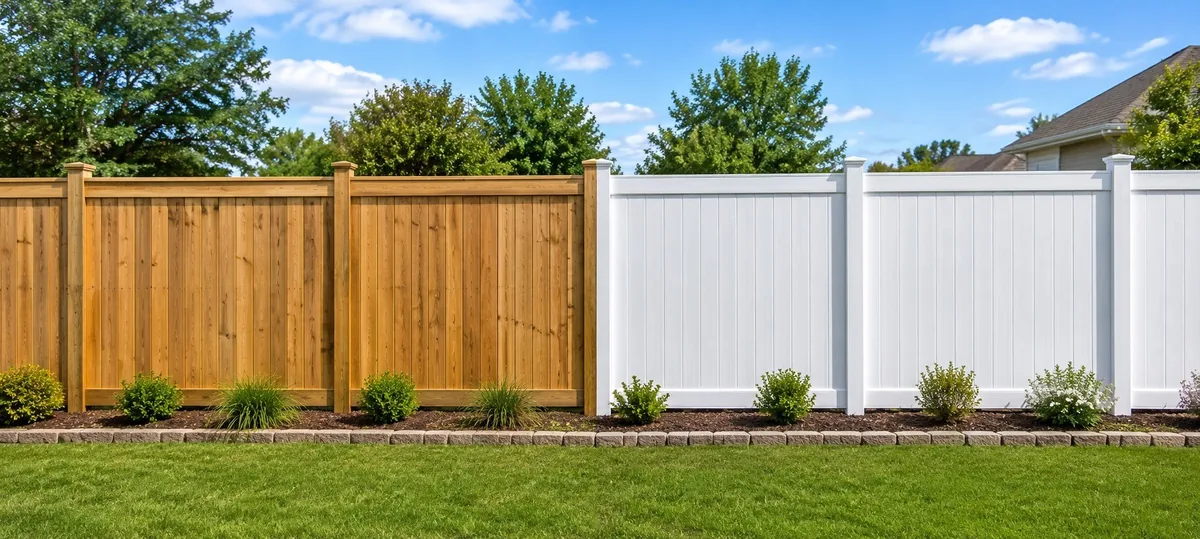
Look is usually the first thing homeowners compare, and both materials have passionate fans. Wood delivers warmth that ages gracefully, while vinyl offers a crisp, consistent finish that never fades. Neither choice is objectively better, because each style appeals to a different taste in landscaping and home design.
Wood Fence Appearance
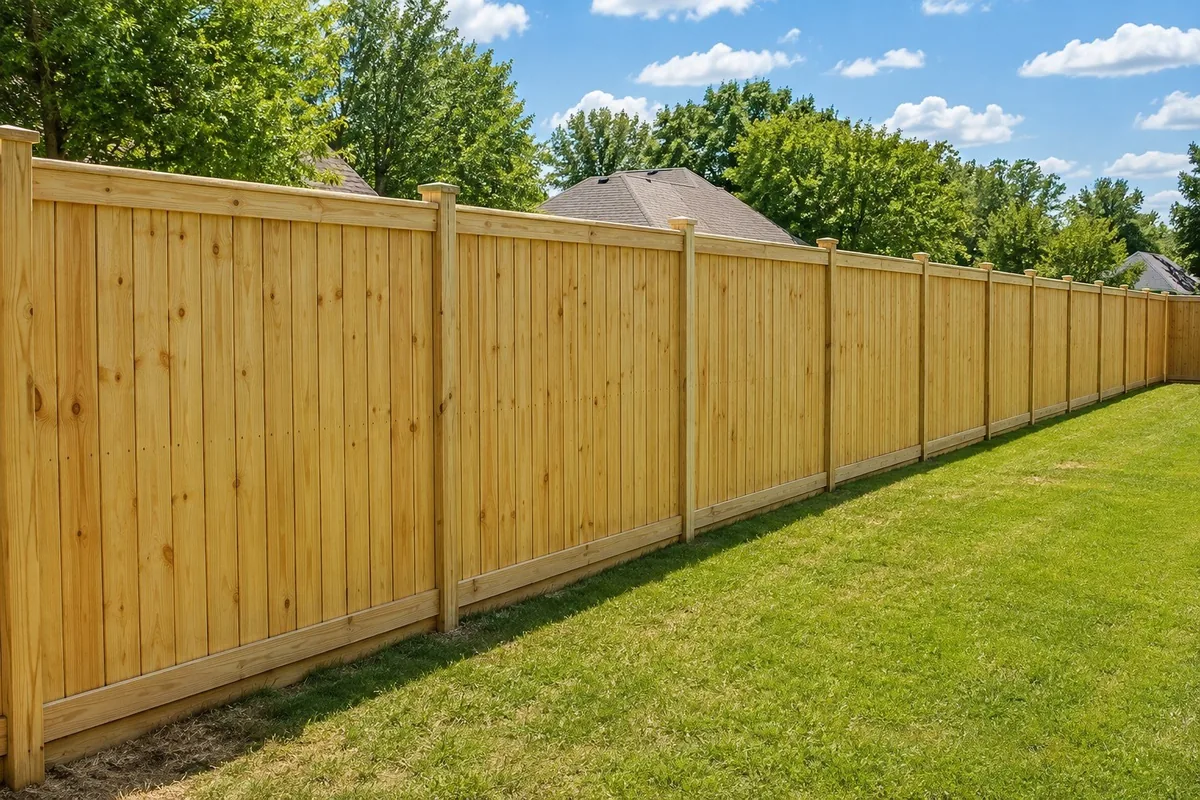
A wood fence brings natural beauty that few materials can match, with visible grain, texture, and color variation on every board. Cedar develops a graceful silver-gray patina over time, and you can paint or stain it to match your home whenever you like. Many homeowners consider small wood defects part of its character.
Vinyl Fence Appearance
Vinyl fencing offers clean lines and uniform color that looks freshly installed for decades, with modern options that mimic wood grain. It comes in a range of factory colors and never needs repainting, which appeals to owners who prefer consistency over character. Its smooth surface also keeps a crisp silhouette against landscaping.
Maintenance and Upkeep
Maintenance is where wood and vinyl diverge more than anywhere else, and it directly affects the long-term cost of your fence. A wood fence is a living material that demands regular care, while vinyl was engineered to ignore weather, insects, and dirt with almost no effort. This gap decides the real cost of ownership.
Wood Fence Maintenance
A wood fence needs cleaning and a fresh coat of stain every two to three years, plus two coats in the first year, to keep its color and protect the lumber. First-year staining alone can add about $1,200 on top of the purchase price, and neglected boards eventually split, warp, or rot. Budget both time and money for this upkeep.
Vinyl Fence Maintenance
Vinyl fencing requires no painting, staining, sealing, or pest treatment over its entire life. A garden hose and an occasional soap-and-water wash remove dirt and grime, and panel sections replace individually if one ever gets damaged. For busy families, this near-zero maintenance is often the deciding factor between the two materials.
Cost Comparison
Total cost is the sum of the purchase price plus every stain, repair, and replacement over the life of the fence, so short-term and long-term math tell different stories. Wood wins on day one, but vinyl catches up as maintenance costs accumulate. Understanding both numbers helps you choose the cheaper fence for your situation.
Upfront Cost
Wood is the budget-friendly choice at $12.94 to $15.72 per linear foot installed, with pressure-treated pine the lowest-cost option. Vinyl costs more initially at $15.72 to $21.27 per linear foot, and premium brands with wood-grain finishes sit at the top of that range. Local quotes vary by height, gate, and terrain, so get written estimates.
Long-Term Value
Over ten years, the break-even point between wood and vinyl arrives around year eight, after repeated staining and board replacement push wood's total higher. Vinyl's longer 25 to 30-year lifespan spreads its higher price across more years of use. Homeowners planning to stay five years or longer usually save money with vinyl.
Durability and Lifespan
How long a fence survives depends on material quality, installation, and the climate it faces, and Alabama's hot humid summers test both options hard. Cedar and redwood naturally resist moisture and insects, while pine needs chemical treatment to compete. Vinyl is engineered to handle everything weather can throw at it.
Wood Fence Lifespan
A well-maintained cedar fence commonly delivers 15 to 20 years of service, with pressure-treated pine closer to 10 to 15 years. Cedar's natural oils resist rot and repel insects, though humidity can still cause boards to swell, warp, or mildew without regular sealing. Replacement is board by board and repairs are quick and affordable.
Vinyl Fence Lifespan
Quality vinyl fencing lasts 25 to 30 years and stays structurally sound through temperature swings from well below freezing to Alabama's summer heat. It never rots, warps, splinters, or attracts termites, and its color holds without painting because the pigment runs through the material. Warranties vary by brand, so compare coverage before buying.
How Alabama's Climate Affects Your Fence
Alabama's combination of intense UV rays, heavy humidity, and frequent thunderstorms creates one of the harshest environments for fences in the country. Sustained moisture makes unprotected wood swell, warp, and decay, while the sun fades and can make some materials brittle. Choosing a material that resists these forces matters more here than in drier states.
Wood fences in Alabama need a disciplined maintenance routine, because humid air and afternoon storms attack the lumber constantly. Vinyl fences shrug off the same conditions thanks to their non-porous PVC surface, which absorbs no moisture and holds its color under strong sun. That climate resistance makes vinyl the lower-stress choice for Gulf Coast and central Alabama yards.
Environmental Impact
Environmental concerns shape the choice for many homeowners, and both materials have a credible story to tell. Wood from certified sustainable forests is renewable, biodegradable, and stores carbon while it grows. Vinyl involves petroleum-based manufacturing, but its longer lifespan and eliminated maintenance can offset that footprint over decades of service.
Which Fence Is Right for You?
There is no single right answer, because the best material depends on your priorities, your property, and your plans. Work through the points below and you will know which option fits your lifestyle. A local professional can then refine the choice with exact pricing for your yard.
Choose Wood If
- You love the natural grain and warmth of real lumber
- You plan to move within three to five years and want low upfront cost
- You enjoy customizing colors with paint or stain over the years
- Your yard has odd angles that benefit from on-site cutting and adjustment
- You want quick, affordable board-by-board repairs when damage happens
- You prefer a renewable, biodegradable material from sustainable forests
- You are comfortable staining and sealing every two to three seasons
- You want a classic look that blends into established neighborhoods
Choose Vinyl If
- You want a fence that never needs painting, staining, or sealing
- You plan to stay in your home longer than eight years
- You are done with seasonal upkeep and just want to rinse it off
- You need maximum resistance to humidity, rot, and termites
- You want consistent color and clean lines for decades
- You prefer replacing one damaged panel over patching boards
- You want a longer 25 to 30-year lifespan with a manufacturer warranty
- You value predictable long-term costs over a lower first bill
Whichever material you choose, professional installation matters as much as the product itself. Properly set posts, correct spacing, and level rails extend the life of both wood and vinyl fences significantly. Ask us about wood fencing or vinyl fencing services to get a free estimate for your property.
Frequently Asked Questions
Which is cheaper, wood or vinyl fencing?
Wood is cheaper upfront at $12.94 to $15.72 per linear foot installed, while vinyl runs $15.72 to $21.27. Over about eight years, repeated staining and repairs make wood more expensive, so vinyl becomes the better long-term value for long-stay homeowners.
How long do wood and vinyl fences last?
A maintained cedar fence lasts 15 to 20 years, and pressure-treated pine lasts 10 to 15 years with regular care. Quality vinyl fencing lasts 25 to 30 years with no painting or staining required, making it the longer-lived material by a wide margin.
Does vinyl fencing look like wood?
Modern vinyl comes in wood-grain textures and colors that mimic cedar and pine convincingly, though up close the surface reads as plastic. If authenticity matters most, real wood is unmistakable, but vinyl offers a consistent low-maintenance substitute for the natural look.
Is a wood or vinyl fence better for Alabama weather?
Vinyl is the better match for Alabama's humidity, UV, and storms because it never rots, warps, or fades like unprotected wood. Wood still works well when owners commit to a regular staining and sealing routine. Your maintenance tolerance should drive the decision.